
veduta Vasto

The Poem to Vasto

In the years of his London exile, Gabriele Rossetti remembered his hometown with these words: Ancient Town Hall of the RomansWhere I first saw the light of day. You, who adorn the beach of the FrentaniWith the Adriatic before you and joyful hills around,And to show the merit of your childrenYou crowned yourself with a…

Rossetti and Dante Alighieri

Gabriele Rossetti was one of the earliest modern commentators on Dante Alighieri. In 1826, he published his Analytical Commentary on the Divine Comedy in London. While his studies are now considered outdated, they were deeply connected to a symbolic and political interpretation of Dante’s work. Upon rereading certain passages, it’s clear how much Rossetti was…

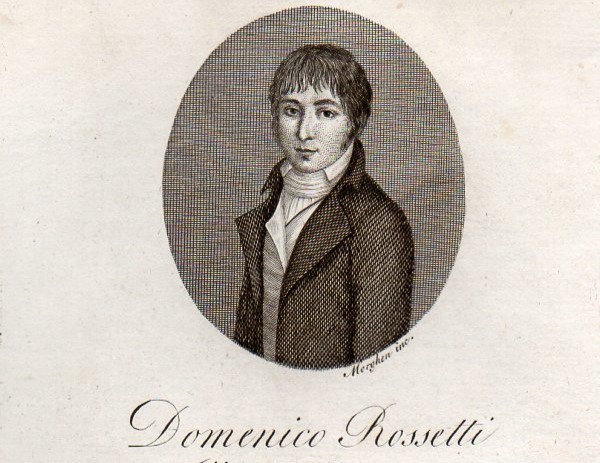
Domenico Rossetti

The Rossetti brothers

The Rossetti family, likely originating from Guardiagrele in the 17th century, initially settled in the San Pietro district. It was here that the first records of their presence in the city can be found. Nicola Rossetti, a blacksmith by trade, lived and worked in a house and workshop located in the square behind the Santa…

Children of Gabriele Rossetti

The monument to Gabriele Rossetti is crowned with four medallions, each bearing the likenesses of his children, whom he had during his exile with his wife Francesca Maria Lavinia Polidori, herself the daughter of another Italian exile, Gaetano Polidori, who had previously been the private secretary of Vittorio Alfieri. The inclusion of his children in…

Rossetti and the Vastesi

Gabriele Rossetti was already well-known during his lifetime, but only within a small circle of Italian literati who regarded him as a symbol of the anti-papal struggle—particularly against Pope Pius IX. At the time, many saw Pius IX as a potential unifying figure for Italy, making Rossetti’s opposition all the more significant. In 1847, two…

Interno Cattedrale

Interior of the Cathedral

Inside the Cathedral of San Giuseppe, the design and decorations are eclectic, drawing inspiration from a Neo-Gothic style. The color contrasts in the wall decorations, featuring white and green marble, echo the bicromatic design of Tuscany’s great 13th-century cathedrals. The church took on its present form after 1890, following restoration work by Francesco Benedetti. It…

Esterno Cattedrale di San Giuseppe

Exterior of the Cathedral

The exterior of the Cathedral of San Giuseppe does not have a uniform character and reflects the various historical phases that contributed to the monument’s current appearance. The façade was likely constructed in three stages. Initially, it was designed in a simple gabled form, typical of the conventual churches of mendicant orders like the Augustinians,…