

Skip to content
Vasto Guide
Vasto GuideVasto Guide
  • THE BEST OF
    • On foot through Vasto
    • Mysterious Vasto
  • HISTORY
    • Roman Histonium
    • The Ruins of Aymone
    • The era of the Captains of fortune
    • The marquisate of Vasto
    • Vasto Borbone capital
    • Vasto Liberty and Littoria
  • NEIGHBORHOODS
    • The main street
    • San Pietro
    • Corso Plebiscito
    • Santa Maria
    • Corso Italia and Aragona
  • THEMES
    • The Churches of Vasto
    • In the footsteps of Rossetti
    • The most beautiful view
    • Popular devotion
    • Caldora walls
    • Palazzo D’Avalos
    • The great Architect of Vasto
  • PROJECT
  • LANGUAGE
    • Italian
    • English
    • French
Search:
  • THE BEST OF
    • On foot through Vasto
    • Mysterious Vasto
  • HISTORY
    • Roman Histonium
    • The Ruins of Aymone
    • The era of the Captains of fortune
    • The marquisate of Vasto
    • Vasto Borbone capital
    • Vasto Liberty and Littoria
  • NEIGHBORHOODS
    • The main street
    • San Pietro
    • Corso Plebiscito
    • Santa Maria
    • Corso Italia and Aragona
  • THEMES
    • The Churches of Vasto
    • In the footsteps of Rossetti
    • The most beautiful view
    • Popular devotion
    • Caldora walls
    • Palazzo D’Avalos
    • The great Architect of Vasto
  • PROJECT
  • LANGUAGE
    • Italian
    • English
    • French

Category Archives: Roman Histonium

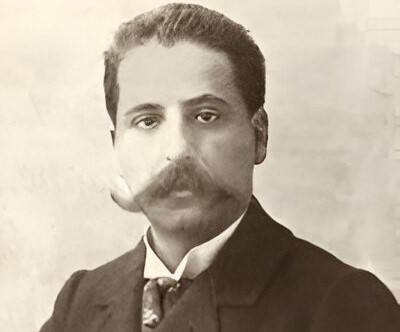
Luigi Anelli

Luigi Anelli

Card, Palazzo d'Avalos EN, Roman Histonium, VastoENBy Stefano Di Leonardo15 January 2025

Born in Vasto in 1860, to a wealthy family of merchants, Luigi Anelli demonstrated his witty streak very early on, founding his first newspaper at just 18 years old. At 25, he published the first edition of his “Ricordi di Storia Vastese” in Naples. Having returned to his hometown, at the age of 35 he…

Luigi Marchesani

Luigi Marchesani

Card, Palazzo d'Avalos EN, Roman Histonium, VastoENBy Stefano Di Leonardo15 January 2025

Luigi Marchesani was born in Vasto in 1802. Son of a notary, he graduated in medicine in Naples, where he practiced until 1837, distinguishing himself as a teacher and researcher, and publishing numerous essays. In 1842, he founded the Vasto hospital, where he worked as surgeon and director. Always passionate about homeland history, in 1841…

The Archaeological Museum

Card, Palazzo d'Avalos EN, Roman HistoniumBy Stefano Di Leonardo15 January 2025

The Archaeological Museum is the oldest in Abruzzo, founded in 1849 as the Municipal Archaeological Cabinet of Vasto, by the local doctor and historian, Luigi Marchesani. His intent was to collect the finds made available by some historic families of the city, together with those that he himself collected and catalogued, on the occasion of…

The Roman Amphitheater

Card, Roman Histonium, The main street, VastoENBy Stefano Di Leonardo14 January 2025

The Roman Amphitheater of Vasto, located in the heart of the city under Piazza Rossetti, represents one of the most important archaeological remains in Abruzzo. Although it is not completely visible due to subsequent urban stratifications, its presence is still tangible, and tells a fascinating piece of Roman history. Dating back to the end of…

Insula Romana

Roman Insula

Card, Roman Histonium, San Pietro ENBy Stefano Di Leonardo14 January 2025

In via Anelli, from number 90 to the end of the road at the intersection with via Sant’Antonio, the wall at the base of the modest houses that overlook it is free of plaster and reveals a curious alternation of bricks and squared stones laid in a rhomboidal: a roman insula. It is a fragment…

Mosaico Marino

The mosaics of the Baths

Card, Roman Histonium, San Pietro ENBy Stefano Di Leonardo14 January 2025

The Roman Baths of Vasto are famous for two large mosaics discovered during excavation campaigns in 1974 and 1997. The first mosaic, known as the Marino Mosaic, measures approximately 38 square meters. It was initially unearthed in 1828 during work near the convent of San Francesco, then a royal sub-prefecture. At the time, it was…

Grandi Cisterne Romane di Vasto

Large Roman Cisterns

Card, Roman Histonium, Santa Maria ENBy Stefano Di Leonardo14 January 2025

At the southern limit of the Loggia Amblingh, where the walls of Vasto once ended, two large Roman cisterns are still visible, which today have been opened towards the promenade and transformed into a characteristic restaurant. Probably built in the first century AD, they were part of a group of six cisterns that guaranteed the…

terme romane

The Roman Baths

Card, Roman Histonium, San Pietro EN, The best of Vasto, The most beautiful views, VastoENBy Ludovica Zimarino1 July 2024

The Roman baths of Vasto were built on the edge of the town of ancient Histonium in the second century AD, and were one of the main attractions of the Roman city for about three centuries. Damaged by the Sannio earthquake in 346 AD, after the fall of the Western Roman Empire, they were progressively…

resti tempio di cerere

Temple of Ceres

Card, Roman Histonium, San Pietro EN, The most beautiful views, VastoENBy Ludovica Zimarino1 July 2024

The current Via Adriatica presents itself as a spectacular balcony overlooking the sea. Beyond it, a steep slope that stops about fifty meters below, where today there is a sports centre, the “Mura delle Lame” park. The name of the site recalls that once, in place of the Via Adriatica, there were the city walls…


This activity is co-financed by the 2014/2020 PSR of the Abruzzo Region – M 19 – Support for LEADER local development of a participatory nature

Privacy policy | Cookie policy | Terms and Conditions

Go to Top